Xeal Transforms Parking Lots: 100,000 Nvidia GPUs to Revolutionize EV Charging Stations into Data Centers

While EV owners wait for their vehicles to "drink up" electricity, the American company Xeal decided that parking lots shouldn't sit idle. The startup unveiled the Laitent platform, which will turn charging infrastructure into a network of compact data centers. The ambitious plan: deploy up to 100,000 Nvidia GPUs right under the open sky.
Energy That No One Needs
The problem with the modern charging network is that it operates at half capacity. Xeal manages infrastructure in 500 U.S. cities, and their network of 1,600 sites already has an authorized capacity of over 200 MW. However, charging stations typically use less than 10% of the maximum allowable limit. The remaining 90%—just numbers on a page that sit idly by.
To rectify this injustice, the company developed Laitent Pods—computational modules the size of a parking space. Each such "box" holds up to 48 Nvidia Hopper or Blackwell architecture GPUs. Since NVIDIA's RTX PRO 6000 now costs $16,000 — double its launch price on some of its professional solutions, effective utilization of every available watt of energy becomes a matter of business survival.
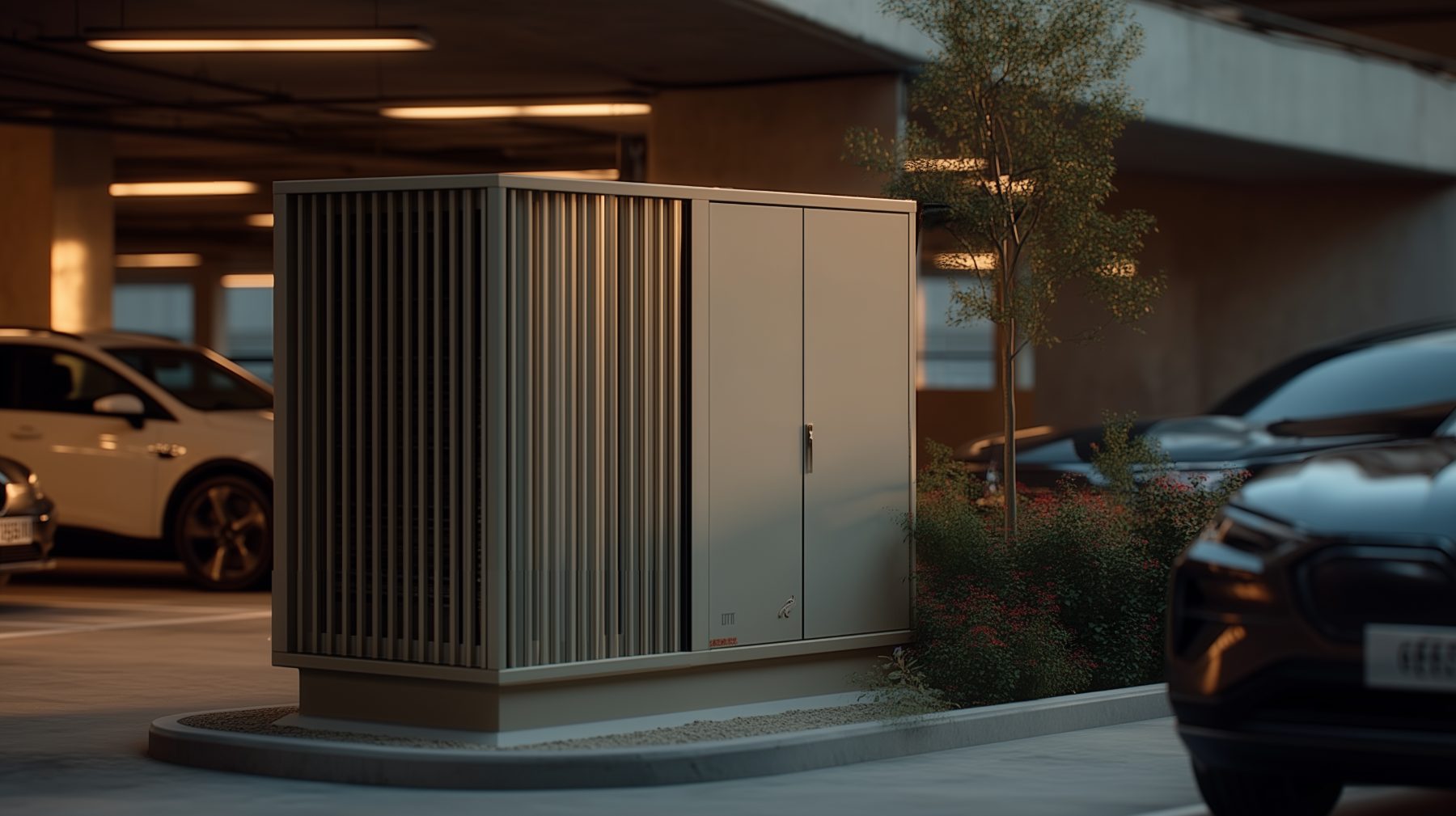
Parking with Xeal computational modules. Illustration: Xeal
AI Inference Instead of Building Giants
The main advantage of Laitent Pods is autonomy. They do not require connection to a water supply for cooling, allowing them to be placed where building a classical data center would be too complex. The platform's software independently manages the load depending on how many free kilowatts remain from charging cars. The system can engage part of one GPU or aggregate the modules' resources within a city.
Xeal focuses on AI inference—running already trained models, rather than their training. This is logical, as training requires stable gigawatts, while a distributed network is sufficient for chatbot operations. Incidentally, SteamOS recently began integration with Nvidia graphics processors, further confirming the omnipresence of "green" chips in all fields.
The company launched the Laitent network in September 2026, and the first real module is expected to be installed by the end of the year. This approach allows new capacities to be connected within months instead of years, as sites don’t need to reapply for electrical connection permits.
Economics of Parking Lots
For parking lot owners, the offer seems attractive: Xeal estimates that installing computational modules can increase the value of a property by approximately $1 million (45 million UAH) with minimal or even zero investments on their part.
The idea of using parking lots for AI computations is not entirely new. Previously, in March 2026, the company Auddia announced plans to deploy solar AI micro-data centers in parking areas of medical centers. Additionally, Belgian startup Tonomia is working on creating a distributed infrastructure in solar canopies. It seems the future of artificial intelligence is forged not only in giant data centers but also in ordinary parking lots near supermarkets.


